
 Save
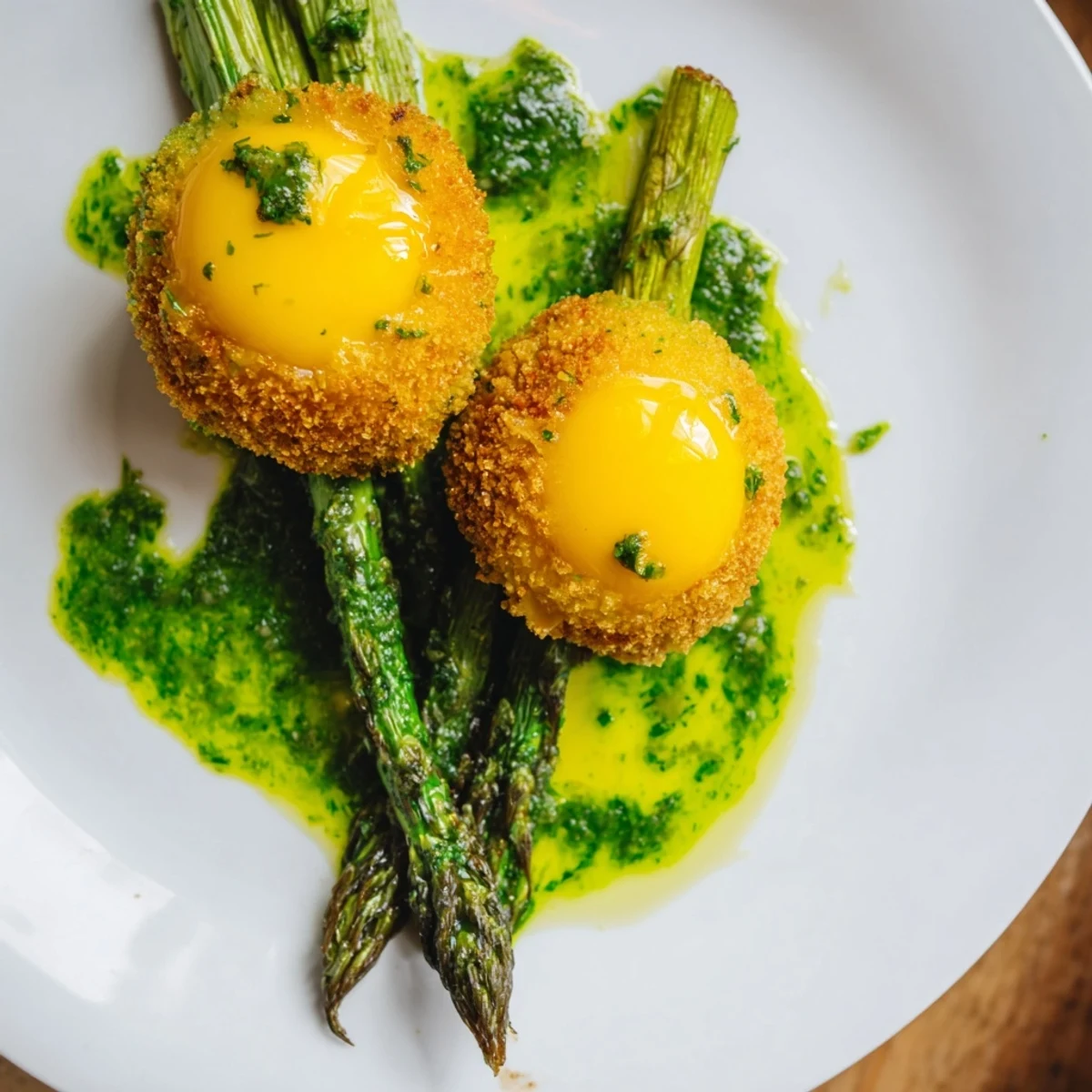
Save Transform simple ingredients into an elegant appetizer with these golden crispy egg yolks. The technique involves briefly freezing yolks, coating them in seasoned breadcrumbs, then deep-frying until perfectly crisp. Served over tender grilled asparagus and finished with a bright herb sauce, this dish balances rich, creamy yolks against fresh vegetables.
The herb sauce combines parsley, chives, and tarragon with garlic and lemon, cutting through the richness while enhancing natural flavors. Total preparation takes 35 minutes, yielding 4 sophisticated portions suitable for dinner parties or special occasions.
The smell of hot oil and fresh tarragon drifting through my kitchen on a rainy Tuesday evening is what convinced me this dish was something special. I had been leafing through an old European cookbook, half paying attention, when a photo of glistening golden orbs perched on green spears stopped me mid page turn. Twenty attempts later, the technique finally clicked and I have been serving this at every spring dinner party since. It is the kind of appetizer that makes people pause mid conversation and stare at their plate.
My neighbor Clara knocked on my door one evening asking to borrow salt and walked into a kitchen that smelled like a Parisian bistro. She ended up staying for the entire batch, standing at the counter eating crispy yolks straight from the paper towel while I kept frying.
Ingredients
- 8 large egg yolks: Fresh, pasture raised eggs give the richest color and flavor, and the yolks hold their shape better during freezing.
- 500 g green asparagus, trimmed: Choose stalks that are uniform in thickness so they cook evenly, and snap off the woody ends by bending each stalk naturally.
- 1 tbsp olive oil: Just enough to coat the asparagus for grilling, and a good quality oil makes a noticeable difference in the char.
- Salt and black pepper: Season each component separately because underseasoned asparagus is the quickest path to a bland plate.
- 1/2 cup fine breadcrumbs: Fine crumbs create a delicate shell that shatters beautifully, while coarse crumbs tend to fall off during frying.
- 1 tbsp grated Parmesan cheese: This is optional but it adds a savory depth to the coating that plain breadcrumbs cannot match.
- 1/4 cup fresh parsley, chopped: Flat leaf parsley has a brighter, cleaner taste than curly varieties and blends more smoothly into the sauce.
- 2 tbsp fresh chives, chopped: Their mild onion flavor bridges the gap between the rich yolk and the sharp lemon juice.
- 2 tbsp fresh tarragon, chopped: Tarragon is the secret weapon here, lending a faint anise note that makes the sauce taste distinctly French.
- 1 small garlic clove, minced: One clove is enough because raw garlic can quickly overpower the delicate herbs.
- 2 tbsp lemon juice: Fresh squeezed only, since the bottled version tastes flat and metallic next to the fresh herbs.
- 1 tsp Dijon mustard: Acts as an emulsifier to keep the sauce from separating and adds a gentle heat.
- 1/2 cup extra virgin olive oil: Use your best bottle for the sauce because the flavor is raw and unmistakable.
- Vegetable oil for frying: A neutral oil with a high smoke point is essential, and you need enough depth for the yolks to float freely.
Instructions
- Whisk the herb sauce:
- Combine the parsley, chives, tarragon, garlic, lemon juice, mustard, and olive oil in a bowl with a generous pinch of salt and pepper. Whisk until everything is emulsified and tastes bright on your tongue, then set it aside so the flavors marry while you work.
- Freeze the yolks:
- Carefully separate each egg yolk from the white, sliding it onto a plate lined with a sheet of parchment, and place the plate in the freezer for about thirty minutes until the yolks feel firm to the touch but are not frozen solid through the center.
- Prepare the coating:
- Mix the breadcrumbs and grated Parmesan together in a shallow bowl, stirring with a fork so the cheese is evenly distributed throughout the crumbs.
- Coat the yolks:
- Working quickly with gentle hands, roll each chilled yolk in the breadcrumb mixture, pressing lightly to adhere the coating on all sides without crushing the delicate center.
- Fry until golden:
- Heat vegetable oil in a small heavy pot to 170 degrees Celsius, then carefully lower each coated yolk into the oil with a slotted spoon and fry for about forty five seconds until the shell is deep gold and crisp, then drain immediately on paper towels.
- Cook the asparagus:
- While the yolks chill, toss the trimmed asparagus with olive oil, salt, and pepper, then grill or sauté over medium high heat for about six minutes until the stalks are tender with beautiful char marks and the tips have started to crisp.
- Plate and serve:
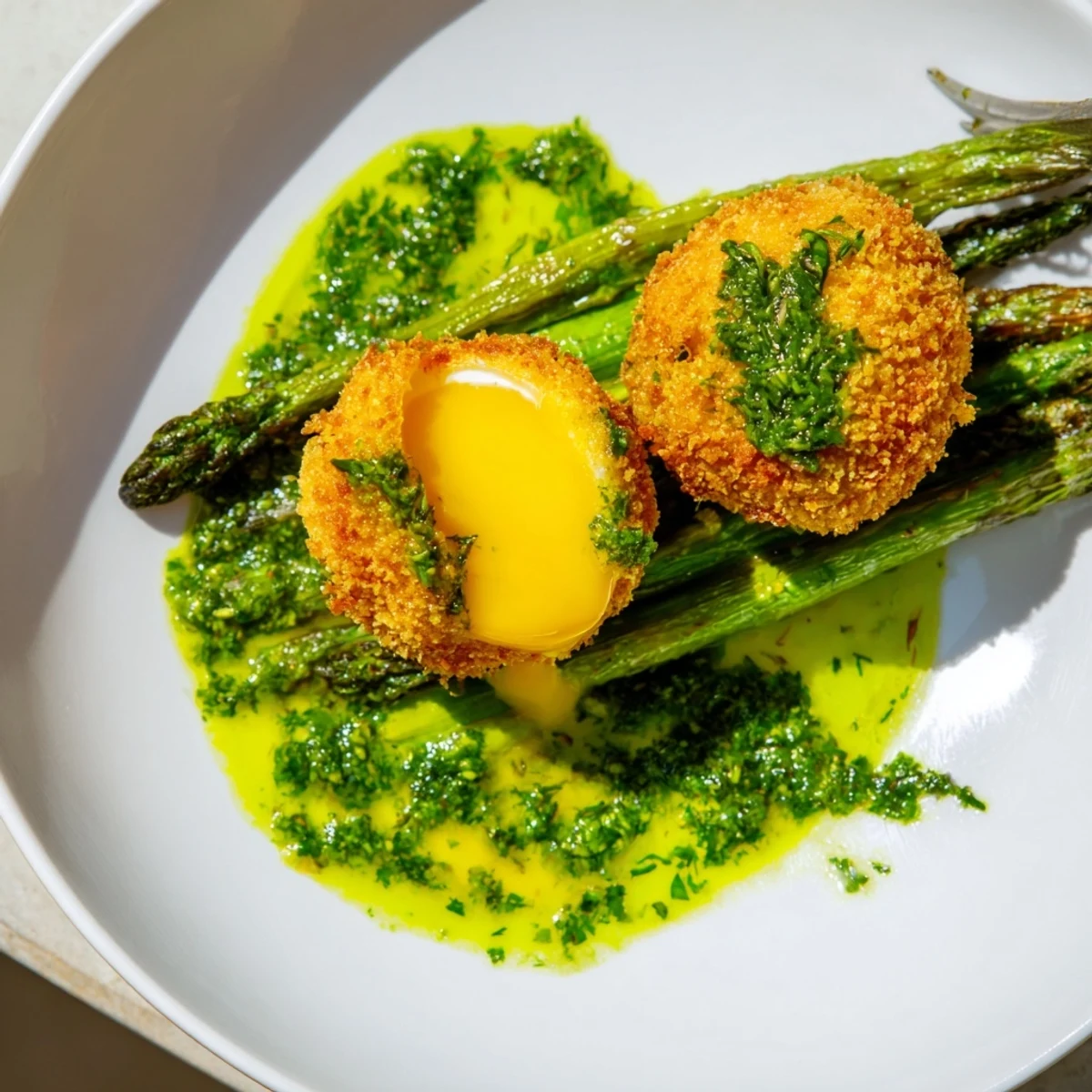
- Arrange the asparagus on warmed plates, gently place the golden yolks on top, and drizzle generously with herb sauce right before bringing them to the table while everything is still hot.
 Save
Save The first time I served this to my mother she closed her eyes after the first bite and did not say a word for almost a full minute. That silence told me everything I needed to know about whether the recipe was worth keeping.
Choosing and Prepping Asparagus
Look for stalks with tightly closed tips and firm stems that snap cleanly when bent. Thick spears actually work better here because they stand up to high heat without wilting, giving you a substantial base for the rich yolk and herb sauce to rest on. After trimming, I like to peel the lower two inches of each stalk to remove any tough outer fibers. It is a small extra step that transforms the texture from stringy to silky.
Getting the Fry Right
Deep frying at home can feel like a production, but this recipe only needs a small pot with two inches of oil and a thermometer clipped to the side. The biggest mistake is letting the temperature drop too low between batches, which makes the coating greasy instead of shatteringly crisp. Fry in batches of two or three yolks and let the oil come back up to temperature between rounds. The whole frying portion takes under five minutes even with the pauses.
Serving and Pairing Thoughts
This appetizer is best served immediately while the yolks are still warm and the asparagus has a slight snap, so have everything else ready before you start frying. A glass of chilled Sauvignon Blanc alongside this dish is a pairing that feels like a warm spring evening on a terrace somewhere lovely.
- If you want a lighter version, bake the coated yolks at 220 degrees Celsius for about four minutes instead of frying.
- Green beans or broccolini make excellent substitutes when asparagus is out of season.
- Always serve immediately because the crispy shell softens quickly once it sits.
 Save
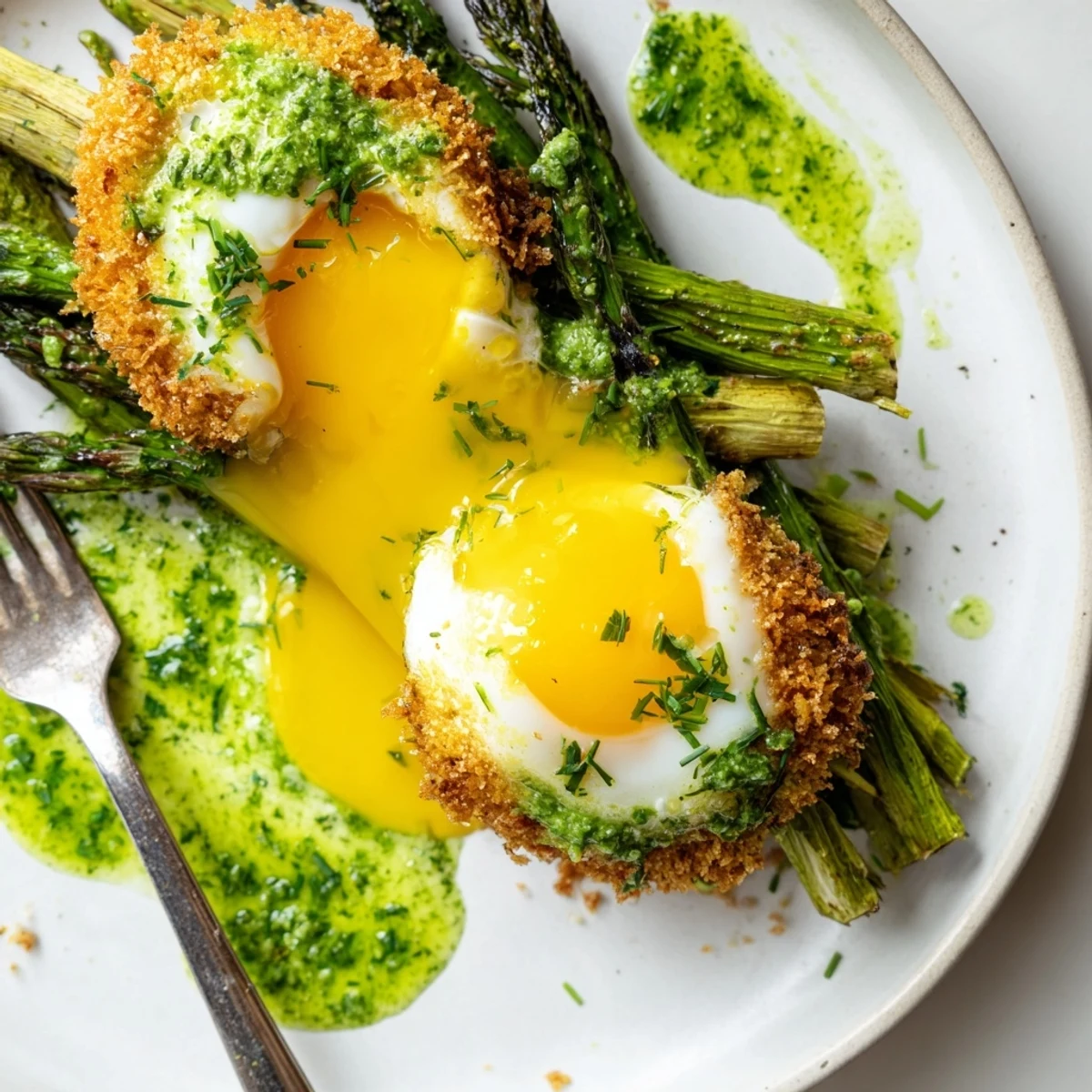
Save Some dishes are just cooking but this one feels like a small performance you get to stage every time you make it. Watch your guests faces when they cut into that golden shell and the yolk oozes out like liquid sunshine over the asparagus.
Common Questions
- → Why freeze the egg yolks before frying?
-
Freezing yolks for 30 minutes firms them just enough to handle coating without breaking, while still achieving that coveted runny center when fried.
- → Can I bake the yolks instead of deep-frying?
-
Yes. Bake at 220°C (425°F) for 4–5 minutes for a lighter version, though the coating will be less crispy than deep-frying.
- → What vegetables work best as a base?
-
Asparagus is ideal for its flavor and texture. Green beans, broccolini, or roasted spears of zucchini also work beautifully.
- → How do I know when the oil reaches the right temperature?
-
Use a kitchen thermometer to verify 170°C (340°F). If unavailable, test by dropping in a breadcrumb—it should sizzle immediately without burning.
- → Can the herb sauce be made ahead?
-
Prepare sauce up to 4 hours in advance and refrigerate. Bring to room temperature 15 minutes before serving for optimal flavor.
- → What wine pairs well with this appetizer?
-
A chilled Sauvignon Blanc or dry Riesling complements the rich yolks and fresh herb notes beautifully.